

About the Course
The goal of this course is to provide an introduction to human physiology. The students learn to recognize and explain the basic concepts that govern each organ and organ system and their integration to maintain homeostasis, as well as some clinical aspects of failure of these systems. The organ systems covered include: nervous, muscle, cardiovascular, respiratory, endocrine, male and female reproductive, gastrointestinal, and urinary.
This human physiology course is targeted to undergraduate and graduate students with an elementary background in biology. In a typical undergraduate setting, this course would fulfill requirements for students applying to professional health science programs such as medical school, nursing, physician assistant, pathologists’ assistant, physical therapy, and doctorate of physical therapy. In addition it is an ideal course in preparation for the MCAT exam.
This human physiology course is targeted to undergraduate and graduate students with an elementary background in biology. In a typical undergraduate setting, this course would fulfill requirements for students applying to professional health science programs such as medical school, nursing, physician assistant, pathologists’ assistant, physical therapy, and doctorate of physical therapy. In addition it is an ideal course in preparation for the MCAT exam.
About the Instructor(s)
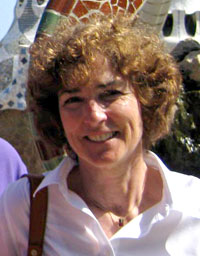
Emma Jakoi is an Associate Research Professor in the Department of Cell Biology at Duke University. She has a Ph.D. in Physiology from Duke University. She has been teaching cell biology and cell/systems physiology to graduate students and medical students at Duke University Medical Center and others for more than 20 years and is the co-author of Physiology: Review for the National Boards. Dr. Jakoi has received several teaching awards including Golden Apples and Master Clinician/Teacher Award from Duke University Medical School. She is currently the course director and course coordinator of the Duke medical school course, Normal Body, and the course director of two graduate courses, Human Structure and Function and Introductory Physiology.

Jennifer Carbrey is an Assistant Research Professor in the Department of Cell Biology at Duke University. She has a Ph.D. in Biochemistry from the Johns Hopkins University School of Medicine. She has been teaching medical students at Duke University Medical Center for the past 6 years, as well as graduate and undergraduate students in Introductory Physiology. She is currently the course director of the cell biology portion of the Duke medical school course, Molecule and Cells.
Course Syllabus
This course will cover the following main topics:
- Homeostatic control systems
- Function of individual organs and organ systems
- Integration of organ systems in the intact organism
Recommended Background
An elementary background in biology.
Suggested Readings
Other than course lecture notes, there are no outside readings/textbooks required. There are two optional books that can help with overall understanding of physiology of the human body: Vander's Human Physiology, 12 th edition and the Physiology Coloring Book, The (2nd Edition) .
.
.Course Format
Introductory Human Physiology is a 12-week course. It consists of 31 lecture hours divided into 63 lecture videos of approximately 20 minutes in length. At the end of each lecture video, there are 2-3 questions for review. Each lecture has notes (6-8 pages) and an optional problem set of 10-15 questions. There are 3 multiple choice exams which test recognition and application of basic science principles and interpretation of physiologic data.
FAQ
- Will I get a Statement of Accomplishment for this course?Students who successfully complete the class will receive a Statement of Accomplishment signed by the instructor.
- Who should enroll in this course?This course is ideal preparation for those who are planning to take the Medical College Admission Test (MCAT) to apply for medical schools in the United States. In addition to preparation for the MCAT exam, this course is relevant for students applying to professional health science programs such as medical school, nursing, physician assistant, pathologists’ assistant, physical therapy, and doctorate of physical therapy.
If you are simply curious about how the human body works, how organ systems coordinate, or the effects of disease on the body, etc., then you might also find this course interesting. Learn what happens to your body when you get sick, workout, or even when you eat a bag of salty potato chips. - Is there a required textbook for this course?No. For each lecture, we will provide notes (6-8 pages) which enrich the learning materials. Other than our lecture notes, there are no textbooks required. However you might find helpful the textbook Vander's Human Physiology: The Mechanisms of Body Function by Widmaier, Raff, and Strang. For a concise overview of each organ system, we recommend the “Physiology Coloring Book" (2nd Edition), by Wynn Kapit, Robert I. Macey and Esmail Meisami.
No comments:
Post a Comment