
About the Course
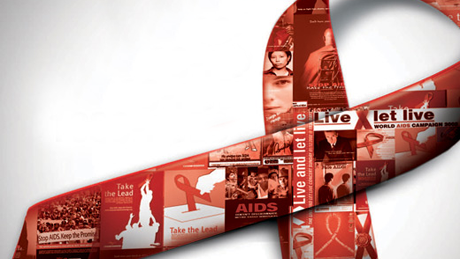
Did you grow up in a world without red ribbons, AZT, the AIDS Memorial Quilt, or Project Red? If you did, chances are good that you came of age before 1981 and are a member of the last generation of humans on this planet to be able to say that you remember those ‘carefree days when all you had to worry about was getting pregnant, herpes, and a bad reputation’ (AID Atlanta).
On June 5, 1981 the CDC released a Morbidity and Mortality Weekly Report describing the first five cases of what later became known as the Acquired Immune Deficiency Syndrome, or AIDS. On that day human history broke into two generations: Those who had grown up before the AIDS pandemic and those who hadn’t.
No matter what generation you grew up in, what we all have in common is a curiosity about AIDS. Where did it come from? How did it get so bad so fast? Are we making progress towards a vaccine? What is it like to be part of a vaccine trial? Are some people just naturally more susceptible – or less susceptible – to HIV than other people are?
All of this and more will be covered in AIDS. Over the course of nine weeks we will discuss a wide range of issues, innovations, and controversies regarding HIV/AIDS in the US and around the world including everything from what circumcision and Truvada have in common; how school children in Africa are changing the way AIDS education is done; where you can go online to learn how many cases of AIDS there are in your area; and how one man’s insistence that HIV does not cause AIDS left millions without access to life saving drugs.
About the Instructor(s)

Dr. Hagen is director of the CFAR LINCS Initiative at the Center for AIDS Research at Emory University(CFAR), in Atlanta Georgia, associate director of the CFAR Developmental Core, and an assistant professor in the Department of Behavioral Science and Health Education at the Rollins School of Public Health. She is also the director/goddess of two science organizations related to AIDS, the Vaccine Dinner Club (official motto: “Hot Food, Cool Science … Count Me In!”) and the CFAR Network Pizza Party (official motto: “Better Science Through Pizza”). Over the course of almost three decades she has worked variously as a community educator, patient educator, medical educator, science educator, and research mentor in the field of HIV/AIDS.
Dr. Hagen’s entry into AIDS came in 1985, only four years into the epidemic, when she began volunteering as a community educator at AID Atlanta, one of the nation's first AIDS service organizations. In 1988 she joined Emory University as a medical educator for Emory’s first AIDS-specific grant, the Southeast AIDS Training and Education Center (SEATEC). Because, in the early days of the epidemic, almost all practicing clinicians had finished their training before the advent of AIDS, SEATEC taught health profession students and practitioners in a four state area how to provide care for patients with HIV while protecting themselves physically and emotionally.
In 1988 Dr. Hagen also began working as a patient educator in the newly formed Grady Memorial Hospital Infectious Disease Program (IDP). Although the majority of the 5,000 patients that the IDP now sees annually are fully versed in the latest research about HIV treatment, in the IDP’s earliest days most of the patients that Dr. Hagen worked with had never even heard of the disease that was making them sick.
In 1998 Emory University received its first funding from NIH to expand the depth and breadth of HIV/AIDS research taking place at the University and Dr. Hagen was recruited help build the Center for AIDS Research. At CFAR she fosters multidisciplinary linkages, helps bring new faculty into AIDS research, and assists junior faculty in developing their HIV/AIDS research careers. She also works on contract with the CDC to provide workforce development training for HIV/AIDS medical staff in Africa, and supervises graduate student research on HIV/AIDS.
Dr. Hagen is the recipient of two of highest honors that Emory can bestow: the Emory Award of Distinction and Teacher of the Year. She has made it her life’s work to help people understand the complexity of HIV/AIDS.
Course Syllabus
Week 1: The history of AIDS, focusing on the origin of HIV, its initial discovery in humans, the early response to HIV (good, bad, and ugly), and its global spread since then.
Week 2: The science of HIV/AIDS, focusing on routes of transmission, how the immune system works, what HIV does to disable the body’s ability to protect itself against everyday germs, and important scientific questions about HIV that are as yet unanswered.
Week 3: The changing face of AIDS, focusing on how HIV affects and is affected by racial, sexual, cultural, and gender-based factors.
Week 4: HIV education, focusing on culturally embedded HIV prevention and awareness messages, the key factors that need to be considered when providing prevention counseling, and where to find information about prevention interventions of proven efficacy.
Week 5: Current biomedical prevention research, focusing on microbicides, male circumcision, pre-exposure prophylaxis, and “treatment as prevention.”
Week 6: Experimental vaccines for HIV, focusing on an explanation of what vaccines are, the requirements for a successful HIV/AIDS vaccine, what is involved in being a volunteer in a clinical trial of an experimental AIDS vaccine, and a discussion of vaccine trial results to date.
Week 7: HIV testing, focusing on when and how it is done, and on what HIV testing can and can not tell us about an individual’s HIV status.
Week 8: HIV/AIDS treatments, focusing on commonly used medications for preventing mother-to-child transmission, the advancement of HIV disease, and the complications of co-infecting illnesses.
Week 9: A review of past, present, and potential future controversies surrounding HIV/AIDS.
Recommended Background
This course does not assume any prior knowledge of, or coursework in, HIV/AIDS.
Suggested Readings
The version of the syllabus available to enrolled students will list resources for each course unit. Some units may require that you complete background reading prior to watching a unit’s videos. Other units may involve having you watch part of a video, do some reading or research, and then continue watching the video. The syllabus will also suggest some optional readings that will take you further into a given unit’s various topics than is covered in a video.
Course Format
The course will consist of 9 lectures. Each lecture will be accompanied by an assignment that may include generating lessons learned, posting on the course blog, taking a multiple choice quiz to test your understanding of the course material, and/or writing a reflection paper for peer review and comment.
FAQ
What happens when I click “Sign Up?”
Clicking “Sign Up” will result in adding you to a listserv of people to be notified by email when the class is ready to run.
Will I get a certificate after completing this class?
Yes. Students who successfully complete all class assignments will receive a certificate signed by the instructor.
Do I earn Emory University credits upon completion of this class?
No. The certificate of completion is not transferable for course credit at Emory University. It is good, however, for demonstrating how much initiative and stick-to-a-tiveness you have (it is going to take time out of your life every week for more than two months after all). In addition, should anyone ever say: “Oh yeah? So what makes YOU an expert on HIV/AIDS?” you can always say: “THIS does!” and shake your certificate in their face. That should shut them up.
No comments:
Post a Comment