 Workload: 8-10 hours/week

About the Course
Financial Engineering is a multidisciplinary field involving finance and economics, mathematics, statistics, engineering and computational methods. The emphasis of this course will be on the use of simple stochastic models and optimization for portfolio optimization, derivatives pricing and risk management.
Our examples will draw from many asset classes including equities, fixed income, credit, mortgage-backed securities and structured products. We will also consider the role that some of these asset classes played during the financial crisis. If time permits, we will also discuss other applications including real options, energy and commodities modeling, and algorithmic trading among others.
We hope that students who complete the course will have a good understanding of the "rocket science" behind financial engineering. But perhaps more importantly, we hope they will also understand the limitations of this theory in practice and why financial models should always be treated with a healthy degree of skepticism.
Our examples will draw from many asset classes including equities, fixed income, credit, mortgage-backed securities and structured products. We will also consider the role that some of these asset classes played during the financial crisis. If time permits, we will also discuss other applications including real options, energy and commodities modeling, and algorithmic trading among others.
We hope that students who complete the course will have a good understanding of the "rocket science" behind financial engineering. But perhaps more importantly, we hope they will also understand the limitations of this theory in practice and why financial models should always be treated with a healthy degree of skepticism.
About the Instructor(s)
Primary Instructors:
Professor Martin Haugh is co-Director of the Center for Financial  Engineering at Columbia University. He originally joined Columbia University in January 2002 and was a faculty member in the Department of Industrial Engineering and Operations Research until June 2005. During this time his teaching and research focused on financial engineering. Between 2005 and 2009, Professor Haugh worked in the hedge fund industry in both New York and London, specializing in equity and credit derivatives. He returned to Columbia in July 2009. Professor Haugh holds a PhD in Operations Research from MIT and also holds Master of Science degrees from the University of Oxford and University College Cork.
Engineering at Columbia University. He originally joined Columbia University in January 2002 and was a faculty member in the Department of Industrial Engineering and Operations Research until June 2005. During this time his teaching and research focused on financial engineering. Between 2005 and 2009, Professor Haugh worked in the hedge fund industry in both New York and London, specializing in equity and credit derivatives. He returned to Columbia in July 2009. Professor Haugh holds a PhD in Operations Research from MIT and also holds Master of Science degrees from the University of Oxford and University College Cork. 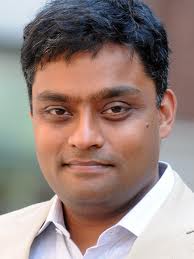 Professor Garud Iyengar joined Columbia University’s Industrial Engineering and Operations Research Department in 1998 and teaches courses in asset allocation, asset pricing, simulation and optimization. His research interests include convex optimization, robust optimization, queuing networks, combinatorial optimization, mathematical and computational finance, communication and information theory. Professor Iyengar received a Ph.D. in Electrical Engineering from Stanford University. He also holds a Master of Science in Electrical Engineering from Stanford University and a Bachelor of Technology from the Indian Institute of Technology.
With guest lectures by:
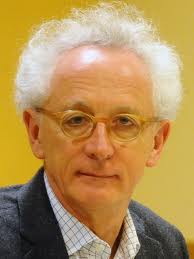 Professor Emanuel Derman joined Columbia University's Department of Industrial Engineering and Operations Research in 2003 where he is the Director of the Financial Engineering Program and co-Director of the Center for Financial Engineering. Prior to joining Columbia, he was a managing director at Goldman Sachs, where he was head of the quantitative strategies group in the equities division, and then head of quantitative risk strategies in firm-wide risk. He is best known for his work on the Black-Derman-Toy interest-rate model and for developing local volatility models of the implied volatility smile. He was the IAFE/Sungard Financial Engineer of the Year in 2000. Professor Derman's research interests include quantitative finance, financial engineering, derivatives valuation, volatility models, and risk management. His memoir, My Life as a Quant: Reflections on Physics and Finance, was published in 2004 and was selected as one of Business Week's top ten books of the year. His newest book Models Behaving Badly, was published by Free Press in October 2011. Professor Derman studied at the University of Cape Town, and received a Ph.D. in theoretical physics from Columbia University in 1973.
 Course Syllabus
We plan to cover the following topics:
- Introduction to derivative securities and option pricing.
- The binomial model and martingale pricing.
- Equity derivatives in practice.
- Asset allocation and portfolio optimization.
- The Capital Asset Pricing Model.
- Statistical biases and portfolio selection.
- Risk management I: VaR, CVaR and coherent risk measures.
- Risk management II: scenario analysis and stress testing.
- Term structure models and fixed income derivatives.
- Mortgage mathematics and mortgage-backed securities.
- Credit derivatives, structured products and the Gaussian copula model.
- Other topics including real options, commodities and energy modeling, and algorithmic trading.
Recommended Background
Students should at some point have taken intermediate to advanced undergraduate courses in: (i) probability and statistics (ii) linear algebra and (iii) calculus.
With regards to programming, we have designed the course so that all required "programming" questions can be completed within Excel. However some questions may be easier to complete using Matlab, R, Python etc. but knowledge of these languages is not required. (Some of the more advanced optional questions may require something beyond Excel but we emphasize that these questions will be optional and not required to complete the course.)
With regards to programming, we have designed the course so that all required "programming" questions can be completed within Excel. However some questions may be easier to complete using Matlab, R, Python etc. but knowledge of these languages is not required. (Some of the more advanced optional questions may require something beyond Excel but we emphasize that these questions will be optional and not required to complete the course.)
Suggested Readings
The course will be largely self-contained.
Course Format
The class will consist of lecture videos, which are broken into small chunks, usually between 10 and 20 minutes each. Some of these may contain integrated quiz questions.
There will also be standalone assignments that are not part of the video lectures. We expect there will be approximately 8 or 9 assignments and that students will need to complete approximately 6 or 7 of these assignments in order to complete the course. Some assignments will contain 1 or 2 optional and more advanced questions. These questions are designed for those who wish to delve more deeply into either the theoretical or computational aspects of financial engineering.
There will also be standalone assignments that are not part of the video lectures. We expect there will be approximately 8 or 9 assignments and that students will need to complete approximately 6 or 7 of these assignments in order to complete the course. Some assignments will contain 1 or 2 optional and more advanced questions. These questions are designed for those who wish to delve more deeply into either the theoretical or computational aspects of financial engineering.
FAQ
- Will I get a statement of accomplishment after completing this class?
Yes. Students who successfully complete the class will receive a statement of accomplishment signed by the instructors.
No comments:
Post a Comment