

About the Course
Quantum physics is the foundation for much of modern technology, provides the framework for understanding light and matter from the subatomic to macroscopic domains, and makes possible the most precise measurements ever made. More than just a theory, it offers a way of looking at the world that grows richer with experience and practice. Our course will provide some of that practice and teach you "tricks of the trade" (not found in textbooks) that will enable you to solve quantum-mechanical problems yourself and understand the subject at a deeper level.
The basic principles of quantum physics are actually quite simple, but they lead to astonishing outcomes. Two examples that we will look at from various perspectives are the prediction of the laser by Albert Einstein in 1917 and the prediction of antimatter by Paul Dirac in 1928. Both of these predictions came from very simple arguments in quantum theory, and led to results that transformed science and society. Another familiar phenomenon, magnetism, had been known since antiquity, but only with the advent of quantum physics was it understood how magnets worked, to a degree that made possible the discovery in the 1980’s of ultrastrong rare-earth magnets. However, lasers, antimatter and magnets are areas of vibrant research, and they are all encountered in the new field of ultracold atomic physics that will provide much of the material of “Exploring Quantum Physics”.
Richard Feynman once said, “I think I can safely say that nobody understands quantum mechanics.” We say, that’s no reason not to try! What Feynman was referring to are some of the “spooky” phenomena like quantum entanglement, which are incomprehensible from the standpoint of classical physics. Even though they have been thoroughly tested by experiment, and are even being exploited for applications such as cryptography and logic processing, they still seem so counterintuitive that they give rise to extraordinary ideas such as the many-world theory. Quantum physics combines a spectacular record of discovery and predictive success, with foundational perplexities so severe that even Albert Einstein came to believe that it was wrong. This is what makes it such an exciting area of science!
About the Instructor(s)
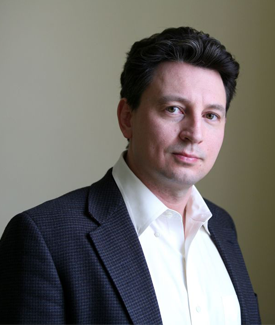
Victor Galitski is a Fellow of the Joint Quantum Institute and Associate Professor at the University of Maryland. He has two PhD degrees in applied mathematics and theoretical condensed matter physics. Dr. Galitski is a theoretical physicist, working on the forefront of quantum science. He has more than 70 publications in top physics journals including Nature physics, Physical Review Letters, and Physical Review series. Galitski’s research in quantum physics is funded by the US Department of Energy, DARPA, National Science Foundation, and the US Army Research Office. Dr. Galitski is a recipient of the NSF CAREER award and several other awards. He is also a co-author of a 1000-page book, “Exploring quantum mechanics” to be published by Oxford University Press in 2012, which is arguably the world’s largest collection of solved problems in quantum mechanics spanning just about the full scope of sub-fields of quantum physics.
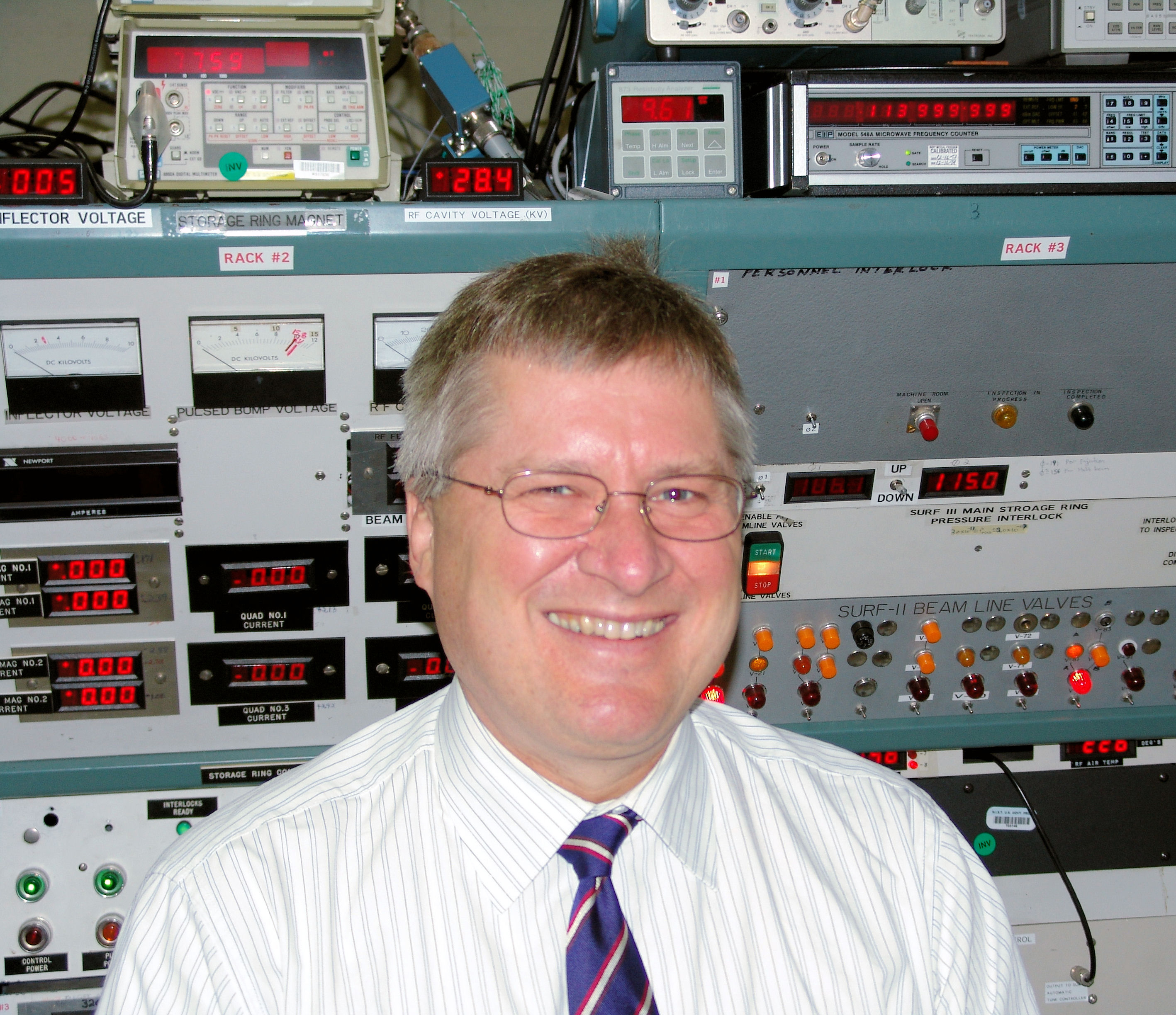
Charles W. Clark is a Fellow of the National Institute of Standards and Technology (NIST) and is Co-Director of the Joint Quantum Institute of NIST and the University of Maryland. He has a Ph.D. in theoretical atomic, molecular and optical physics from the University of Chicago and has spent most of his career at NIST. Since 1997 he has run a summer course on solution of physics problems for first-year graduate students of UMD, and he is co-editor of the NIST Digital Library of Mathematical Functions, which will be used as a primary reference in some parts of the course.
Recommended Background
The purpose of this course is to provide a graduate/advanced undergraduate level introduction to quantum mechanics. The emphasis throughout the course will be on applications of general techniques to specific quantum-mechanical problems and phenomena. Basic understanding of calculus and linear algebra is essential for completing this course, and knowledge of differential equations and Fourier transforms is valuable. Previous exposure to quantum mechanics would be helpful, but is not assumed. The course will be self-contained and an introduction will be provided.
Suggested Readings
Exploring Quantum Mechanics: A Collection of 700+ Solved Problems for Students, Lecturers, and Researchers, by Victor Galitski, Boris Karnakov, Vladimir Kogan and Victor Galitski, Jr. (Oxford University Press, to be published in 2012, ISBN 978-0199232727)
Course Format
The class will consist of lecture videos, individually between 8 and 20 minutes in length, with approximately two hours of lectures per week. These contain 1-2 integrated quiz questions per video. There will also be standalone homework assignments that are not part of video lectures.
FAQ
Will I get a certificate after completing this class?
Those who complete the course will get a Statement of Accomplishment.
No comments:
Post a Comment